

Thanks to the startling success of young pitchers in recent years — look at how immediately guys like Paul Skenes, Jacob Misiorowski, and Cam Schlittler have dominated the big leagues — it's become a forgotten tradition that young arms tend to struggle upon reaching the top level of the sport. The leap from Triple-A to the majors is huge; there's no shame in failing a few times against the best hitters in the world.
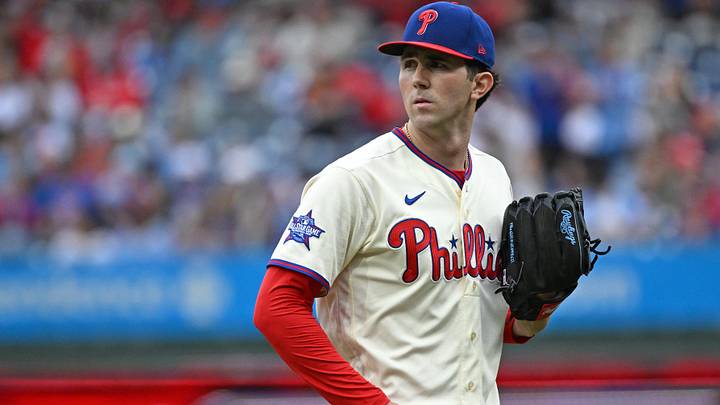
That certainly applies to Philadelphia Phillies right-hander Andrew Painter, who has had one of the more up-and-down rookie campaigns in recent memory. He's had some disastrous outings, like his eight-run blowup against the Athletics in early May. He's also produced some brilliance, like in his most recent outing against the Guardians en route to a second consecutive quality start.
Add it all up, and you've got a young pitcher who owns a 5.40 ERA and 4.38 FIP through his first 50 big-league innings. With his opening act out of the way, it's now time to find out what the 23-year-old is made of.
Andrew Painter must use golden opportunity with Phillies to find sustained MLB success
Now that Taijuan Walker is out of the picture, Painter should have a long leash to pitch through his struggles in Philadelphia this year. For the sake of his long-term development, that should greatly benefit both him and the Phillies.
He's also not going to be asked to be anything more than a No. 4 starter at the most right now. Zack Wheeler, Jesús Luzardo, and Christopher Sánchez may be the best one-two-three punch in baseball. If Aaron Nola ever rediscovers his form of yesteryear, Painter can feast against opposing No. 5 starters.
That's a comfortable spot for a rookie to be in, especially one of his caliber. The best parts of his game are obvious: Painter works with a deep arsenal — four of his six pitches producing neutral or positive run value this year. He's also done a remarkable job of limiting loud contact, mostly thanks to a slider-splitter combo that has generated a combined wOBA below .250.
Then again, his flaws are equally observable, including a four-seam fastball that is getting bashed around by big-league hitters. Despite good velocity, Painter's four-seamer is responsible for a .547 slugging percentage when put in play, which is partly due to his lack of movement compared to league averages. In fact, all six of his offerings are producing below-average vertical break, which is partly why he's struggling to win up in the zone with his fastball.
Even on a more surface level, it's plainly obvious that a pitcher with subpar strikeout, whiff, and ground ball rates is going to have a difficult time sustaining success. His upside remains enormous, and the opportunities will be there so long as he stays healthy, but there's plenty for Painter to work on as he tries to seek more consistency in his results on a start-to-start basis.
 Add us as a preferred source on Google