

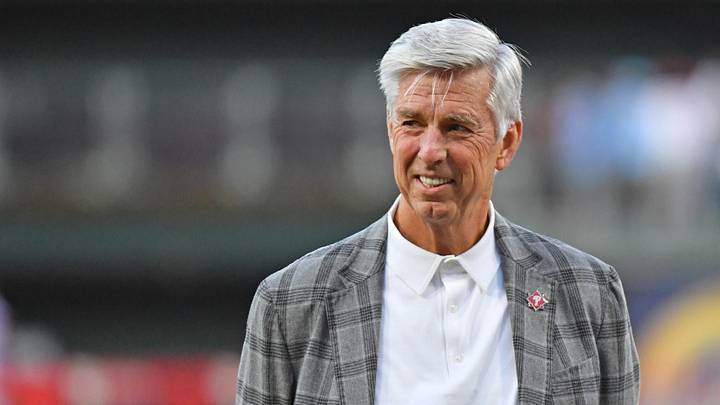
The Phillies were 9-19, buried in early-season embarrassment, and Dave Dombrowski looked like an easy target. Nobody had to manufacture the outrage. Stale roster. Shaky bullpen. A lineup leaning too hard on the same familiar names.
When Rob Thomson got fired on April 28, plenty of people looked right past the dugout and straight toward the front office.
That’s why Spike Eskin’s defense of Dombrowski on SportsRadio 94WIP may have struck a nerve. His argument was pretty simple: Phillies fans and media went too hard at Dombrowski because the roster was never the real problem. The roster was fine. The players had quit on the manager. Dombrowski saw it, made the uncomfortable move, and now the Phillies’ surge under Don Mattingly is the proof.
That argument may deserve more room than some fans want to give it. The turnaround hasn’t been subtle. Since Mattingly took over as interim manager, the Phillies have gone from looking like one of baseball’s biggest disappointments to looking like a team that still has enough talent to make the National League uncomfortable. They ripped off one of the best stretches in baseball, climbed back over .500, and moved into second place in the NL East picture.
That doesn’t happen if the roster is completely broken.
Spike says Phillies fans were too hard on Dave Dombrowski after the Rob Thomson firing and owe him an apology.
— SPORTSRADIO 94WIP (@SportsRadioWIP) May 18, 2026
“It was not the roster. The roster was fine. The problem was the players had quit on the manager and he needed to replace the manager." pic.twitter.com/JRlOPcYVCP
Dave Dombrowski may have made the Phillies’ hardest call at the right time
Thomson had real equity. He helped guide this group through meaningful playoff runs. Players liked him and fans had reason to respect him. But by the end, something had clearly gone flat.
Mattingly didn’t walk in and reinvent the sport. His message, at least publicly, has been much simpler than that. Accountability. Cleaner baseball. Do the little things. Stop treating the season like it will eventually fix itself.
His early “we” messaging has been the right tone for a veteran team that knew it had underachieved. The players were not given an escape hatch. Thomson’s firing was framed less as one man taking the blame and more as a group being forced to look in the mirror.
Dombrowski deserves credit for making the call before the season slipped into a full-blown disaster. Waiting another three weeks might have felt more polite, but also could have wasted the year.
But that is where the apology conversation needs some limits. Dombrowski being right about the manager doesn’t mean every roster criticism was wrong. The Phillies still have questions. The lineup can still feel too top-heavy. And the bullpen and pitching depth still have to survive a rigorous summer. Beating up on lesser teams is still better than losing to them, but it doesn’t erase every concern.
The fairest answer is that Phillies fans do not owe Dombrowski a full apology yet, but they might owe him some credit. He did not panic-trade his way out of a bad month. He identified that the problem might have been less about talent and more about urgency, voice and accountability. Then he made the kind of ruthless move presidents of baseball operations are paid to make.
The Phillies’ turnaround has made the Dombrowski debate a lot more complicated than it was when they were 9-19. If this surge continues against better competition, the conversation changes again. Maybe Dombrowski’s most criticized move is the one that kept the Phillies’ season from slipping away.
 Add us as a preferred source on Google