

The Philadelphia Phillies have been on a roll ever since the Field of Dreams game and fans have been quick to attribute the newfound success to a recent team meeting that emphasized hitters having a plan at the plate. It’s wonderful to see that paying off, but the question begs asking: why did it take so long for such a simple idea to sink in?
#Phillies approach has been day/night difference since PHI staff held a meeting to address the chasing, lack of plan & overall poor approach. Was a few weeks back.
— Alex Coll (@Alexcoll_) August 18, 2026
More disciplined, forcing pitchers to throw more Ks at the risk of BB — Not chasing contact. More RISP success.
The Phillies’ offense has been extraordinarily frustrating throughout the current era of franchise history. Superstars Bryce Harper and Kyle Schwarber have pulled a lot of the weight, but they’ve mostly been surrounded by uninspiring ancillary pieces. Free-swingers like Nick Castellanos and Trea Turner have combined with largely uninspiring youngsters like Alec Bohm and Bryson Stott to form a completely untrustworthy collection of hitters.
One continual knock against the Phillies was an apparent lack of a plan at the plate, as fundamental aspects of the game like working counts, moving runners over and putting the ball in play frequently eluded them. It often appeared to fans that each player would approach his at bat with no sort of coherent strategy, ultimately landing on swinging wildly.
In a shocking turn of events, that didn’t lead to great results. Once-promising youngsters Bohm and Stott plateaued, while aging core pieces like J.T. Realmuto took significant steps backwards from the heights they once inhabited.
2026 has been more of the same, with Schwarber and Harper (and to a certain degree Brandon Marsh, who’s fallen on hard times since the All-Star break) having done the bulk of the heavy lifting while Turner, Bohm, Realmuto and the rest of the lineup have coasted by. Coming into Wednesday’s game against the Miami Marlins, the Phils sported a collective .713 OPS and a completely untenable .312 on-base percentage. Add in a 22.6 percent strikeout rate, and you have the makings of a lineup that can’t get out of its own way.
Why has it taken five years for the Phillies to finally change their offensive approach?
So why is it that it took until mid-August for the team to develop a coherent strategy when batting? The Phillies didn’t all of a sudden start to falter and need to come up with a new approach. Their feast-or-famine group of position players has mostly gone hungry through the season’s first four-plus months.
Moreover, this is not just a 2026 problem. Even in previous years when the offense was seemingly firing on all cylinders, we’ve seen them abruptly fall silent. Take the 2022 World Series for example, in which the Phils scored 15 runs over the series’ first three games, and looked like they could pummel the vaunted Houston Astros on their way to raising the Commissioner's Trophy.
And then Game 4 came along. Swingman Cristian Javier, who had less than 100 games of big league experience at that point in his career, stymied the Phillies for six innings en route to a combined no-hitter, just the second no-hit game in World Series history. The Phils went on to score a grand total of three runs in the final two games of the matchup, going out with a whimper in a postseason they appeared set to dominate.
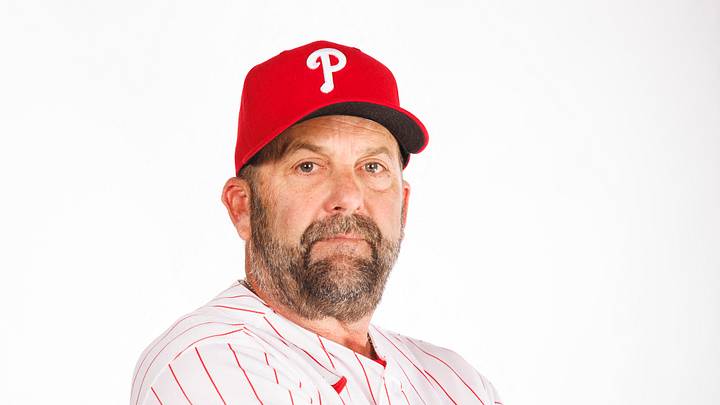
That pathetic showing should’ve been all it took for the club to employ a revamped hitting philosophy, but no such change came. Much-maligned hitting coach Kevin Long has remained in his position through the present day, and the results have not improved.
The 2023 postseason offered a similarly disappointing ending, as the Phils won the first two games of the National League Championship Series against a mediocre Arizona Diamondbacks squad, only to fall asleep at the wheel and lose the series in seven games. The following two postseason runs were dead on arrival, as the Phillies were bounced unceremoniously in the first round after completely failing to hit.
Four straight October faceplants should have knocked some sense into this team, and yet it appears no one took the hint. The first four-and-a-half months of the 2026 campaign have been some of the most infuriating in recent history, largely due to an offense that couldn’t hit its way out of a wet paper bag. Every Phillies fan is praying that the most recent team meeting will yield lasting results, but given the organization’s track record, that’s hard to believe.
 Add us as a preferred source on Google