

Peter Fatse is coming to the Philadelphia Phillies to fix a complex problem. The team had MLB’s worst OPS+ despite having the game’s fourth-highest payroll. There are more than just a few small kinks to work out.
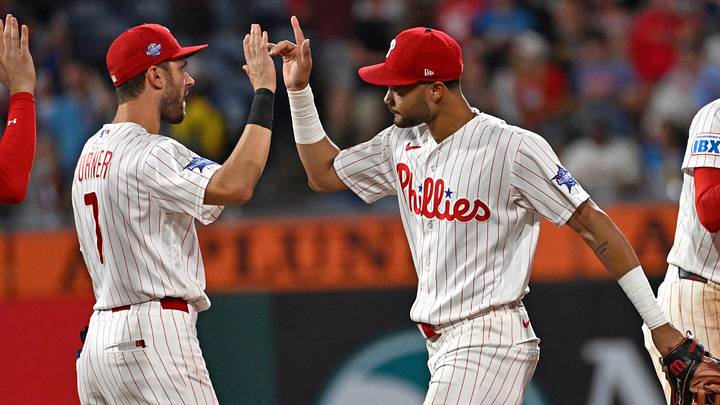
Both mentally and synergistically, the Phillies are flawed. Star shortstop Trea Turner’s end-of-season comments about his own hitting showed alarming self-doubt, and since Rhys Hoskins' departure, the lineup has seriously lacked right-handed power. As September wrapped up, only three righties regularly featured in the starting lineup.
Of course, it’s up to president of baseball operations Dave Dombrowski to fix the roster construction issues, but Fatse may be drawing from a short deck given the Phillies' monetary constraints.
In the short time since he was hired as hitting coach, Fatse has reached out to players and tried to absorb as much as he can about the club before the lockout.
“[I’m] kind of drinking through a fire hose right now with information,” he told reporters on Friday.
One of the initial items on his to-do list was reaching out to Turner. The two have exchanged texts, and Fatse aims to get him back to his 2025 production. Relationship building is vital for any Major League coach; Fatse considers it among the most important parts of his job.
“We’re starting to work through what those trips [to visit Turner] are going to look like,” he said. “That is all in the works within the next couple of weeks.”
Unlike Turner, Fatse and Kyle Schwarber already have an established relationship. As the Boston Red Sox assistant hitting coach in 2021, when Schwarber was dealt there at the deadline, the duo had a brief rapport, with Fatse calling him “one of the best teammates I think I’ve been around.”
He’s excited to work with Justin Crawford, too. The dynamic center fielder is entering his sophomore season, and despite a sub-league-average offensive season, there were bright spots during his rookie year. Foremost among those was his .289 batting average from June 29 onward, as well as his strong whiff% and K%.
“I think it ultimately comes down to how do we leverage a player's strengths when they're up here early?” Fatse said of Crawford’s skills. “That's more of a confidence thing. But just from my experience with players, you [don’t want to be] chasing down something you don't do well.
That’s something he learned from both his time in Boston and his brief tenure with the Tampa Bay Rays as a consultant in their research and development department this summer. Although he spent most of his time with Tampa without players, he joined the team a few times and got a grasp of how the AL pennant winners functioned.
“The thing that I would say that struck me was just the culture from top to bottom. It just seemed like everybody was aligned and on the same page and trying to find ways to get better in whatever department they were in,” Fatse said. “It just seemed like everybody was pulling from that end of the rope.”
There’s a sentiment among certain sects of Phillies fans that Dombrowski has done a poor job as president of baseball operations. If you only view his work through on-field personnel changes, that may be a fair criticism. What's impossible to criticize, though, are the ways Dombrowski has reshaped the Phillies organization from top to bottom in the sense that Fatse means.
Under previous regimes, messaging across the organization was often disjointed. Minor league players jumped from level to level and received conflicting instruction. That has largely improved over the past several years, and the Phillies farm system has been more productive as a result.
Even as the Major League hitting coach, Fatse will also have some influence over the minor leagues too, particularly in spring training when players like Aidan Miller and Bryan Rincon come to big-league camp.
Fatse’s influence on their development doesn’t start just when they get to the Majors, and he’ll bring different messaging than what Kevin Long has for the past four seasons.
“It just comes down to the conversation around what you're swinging at, but it's more specifically before two strikes. How do you prioritize what parts of the zone you want to attack? And having a game plan for that and then ultimately being able to be agile when the game tells you something else is needed,” he said.
 Add us as a preferred source on Google