

Yogi Berra once said baseball is 90 percent mental and the other half is physical. The math never worked, but anyone who has played or been around this game long enough understands exactly what he meant.
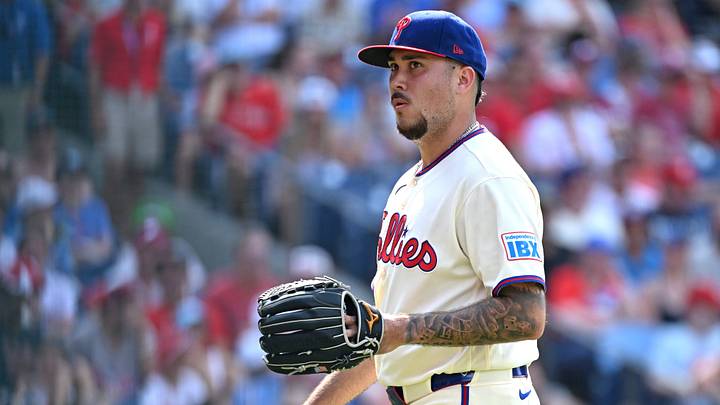
Few pitchers have carried more of that mental weight into a season than Orion Kerkering. The lasting image of his 2026 season was the walk-off throwing error in the 11th inning of Game 4 of the 2025 NLDS, the play that ended Philadelphia's season at Dodger Stadium two years ago. Plenty of players never fully recover from a moment like that, but the best ones know how to bounce back.
Kerkering answered it by posting a 2.43 ERA over 37 innings in 39 relief appearances before the All-Star break, allowing only three home runs. That stretch was proof that he had the toughness to put October behind him.
Then the floor gave out. On July 31 in Baltimore, he recorded two outs and gave up four runs. He never rebounded from that outing, finishing the year with a 9.43 ERA over 21 innings. Opponents hit .297/.409/.451 against him over the last two months of the season, and after a four-run outing against the Mets in September, the Phillies optioned him to Triple-A. He ended the year with a 4.97 ERA across 58 innings and was left off the Wild Card roster.
What Orion Kerkering has to fix to rebound for the Phillies
Some of the damage was bad luck, with soft contact on his sinker finding holes. But the bigger story was the command. His walk rate climbed to a career-high 12.7 percent, and his fastball velocity dipped slightly from 97.5 mph before the break to 96.9 after it.
As a former pitcher, I can tell you that losing the ability to fill up the zone rarely has one cause. Sometimes it's a confidence problem, where you start overthinking before you even make a pitch. Sometimes your delivery drifts a little, and you never notice. Sometimes you're tipping pitches. Whatever starts it, the effect on hitters is the same. When you can't land your secondary stuff for strikes, big-league hitters eliminate pitches, sit on one pitch and wait.
With today's cameras and data, hitters know your tendencies before they even walk up to the plate. Kerkering said as much himself when he suggested hitters were sitting on his sweeper because they already knew it was his go-to pitch.
The good news is that the answer might be the pitch he added this year. His splitter was his best offering in 2026, producing a .216 xwOBA and a 36.8 percent whiff rate while hitters drove it into the ground. He used it mostly against left-handers, but learning to use it against righties, too, would make the sweeper a pitch he chooses rather than one hitters expect—and obviously, a return to his early-season velocity would make both play up.
There's also a business side. Kerkering is heading into arbitration, and with the Phillies facing a winter of coaching staff changes, a trade isn't out of the question. A team that believes it can fix him would get multiple years of control. The Tampa Bay Rays just showed what a fresh set of eyes can do when they took Freddy Peralta from the New York Mets at the deadline and rebuilt his delivery and pitch mix on the way to an ALCS MVP award.
I'd rather see Kerkering get that turnaround in Philadelphia, and having had my own ups and downs on the mound, I'm rooting for the guy. The path back likely looks like spring innings in low-leverage spots, rebuilding trust one clean frame at a time, and pitching his way back toward the late-inning roles on a staff that will need him. Kerkering showed us he can be that pitcher for half a season. Now he just has to find it again.
 Add us as a preferred source on Google