

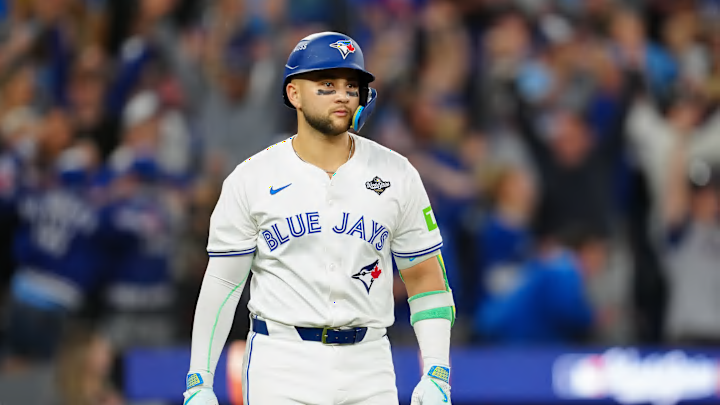
In the aftermath of the Philadelphia Phillies losing out to the New York Mets in the Bo Bichette sweepstakes, Phillies fans are left to wonder why they came up empty-handed after appearing as the favorites to sign the infielder following a meeting earlier this week. The Mets and Bichette agreed to a three-year, $126 million contract, after the Phillies had reportedly agreed to shell out $200 million over seven years.
The Phillies weren’t expected to make many moves this winter. Their main priority was re-signing Kyle Schwarber, and they did that. It was surprising that they had an interest in Bichette, considering their perceived lack of financial flexibility.
The limitations the Phillies have imposed on themselves have unsurprisingly gotten in the way of signing some top free agents in recent offseasons, most recently Bichette. Not only did it cost them a golden opportunity to upgrade the offense, but they lost out to their division rivals.
How the Phillies sabotaged their chances of signing Bo Bichette
Not including opt-outs in contracts
The Mets' contract with Bichette includes player opt-outs after the first and second seasons. The Phillies don't include opt-outs in their contracts with free agents, as noted by Phillies Tailgate on X.
It’s a strategy that, in hindsight, has likely hindered their chances of adding some top free agents. If Bichette preferred a short-term deal, Philadelphia wouldn't have signed him anyway, as they wouldn't have been able to afford him.
Their discomfort going too far over the luxury tax threshold
Bichette is earning $42 million per season over the course of his deal with the Mets. The Phillies have one player on their roster with an AAV of $40 million or more: Zack Wheeler, who agreed to a three-year, $126 million extension that began last year.
The next highest is Kyle Schwarber's $30 million AAV following the new contract he agreed to this offseason.
Phillies president of baseball operations Dave Dombrowski and managing partner John Middleton have expressed their unwillingness to go much further past the fourth and final luxury tax threshold of $304 million. They would've blown past that if they signed Bichette to a short-term deal.
The new Mets infielder will earn much more in 2026 than the roughly $28.5 million he would have had he agreed to the reported long-term deal with the Phillies.
 Add us as a preferred source on Google